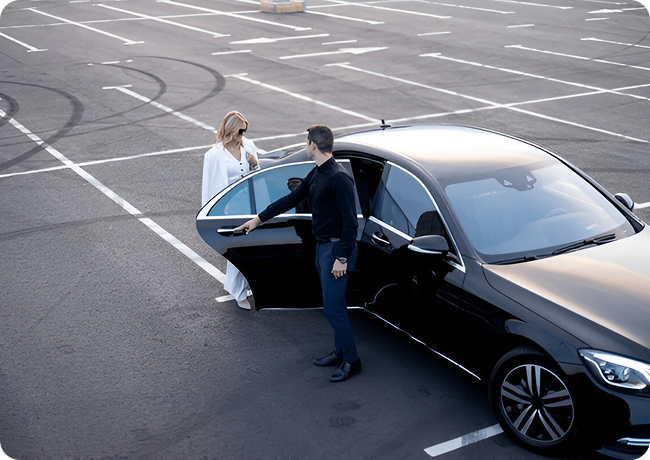
Your chauffeur awaits.
From
To
Pickup Date
MM/DD/YY
Select date
Pickup Time
Select time
Passengers
2
Luggage
0
Need help? Call (571) 578-0000
From
To
Pickup Date
Need help? Call (571) 578-0000
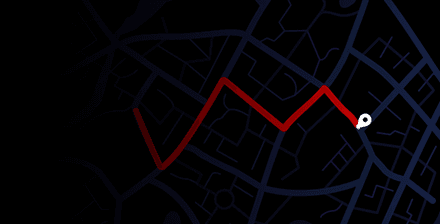
Chauffeured intercity car service between Dallas Fort Worth and Austin down I-35, with flat all-inclusive fares and usable working time, 24/7.
Dallas to Austin car service from Genius Limo is a pre-booked, chauffeured intercity ride down I-35, quoted flat and all-inclusive, so the three hours are usable time rather than a stressful drive.
It is roughly 195 miles and about three hours in clear conditions, though three and a half to four is the honest planning figure, because I-35 through Waco, Temple and Georgetown carries heavy volume. Door to door, a car is closer to flying than the flight time suggests once you add airports and security at both ends, and the whole way is time to work.
Book premium limo and black car service across the U.S. through one reliable team, with local chauffeurs, clear pricing, and support when plans change.
All rides are handled by licensed, experienced chauffeurs with deep knowledge of the roads they drive. Safety, courtesy, and professionalism on every trip.
Book hourly limo service for business meetings, events, and flexible schedules. Your private car is ready when and where you need it.
Rely on Genius Limo for city-to-city rides, airport transfers, and corporate travel between major U.S. markets, with vetted local service in every city.
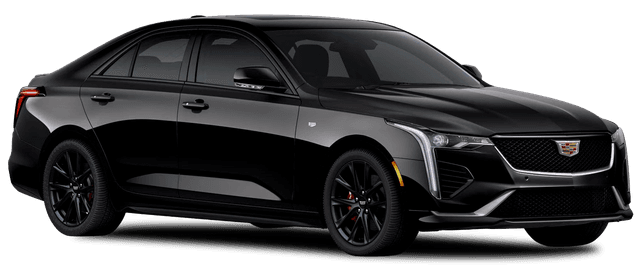
Cadillac, Mercedes, Lincoln, or similar. Perfect for solo travelers or executives—quiet, stylish, and comfortable.
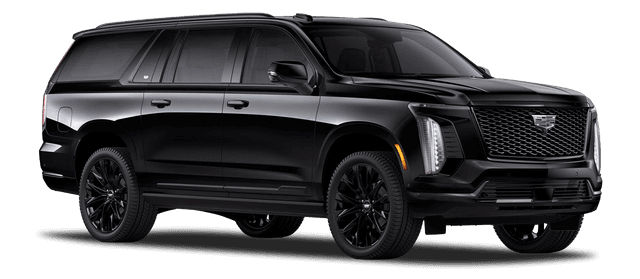
Cadillac, Chevrolet, GMC, or similar. Roomy, private, and equipped with all the amenities for a relaxing journey.

Mercedes-Benz Sprinter or similar. Ideal for families or small groups—spacious and versatile.

Classic stretch limousine seating up to 9. Perfect for weddings, proms, and nights out—arrive in style.
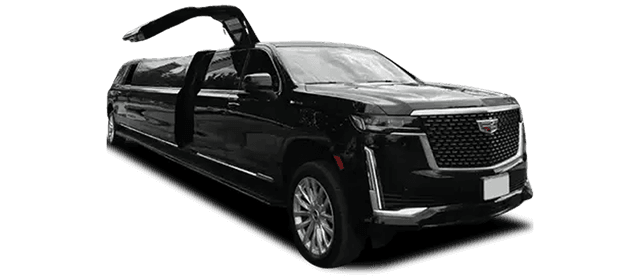
Extended stretch limousine seating up to 16. Ideal for bachelor & bachelorette parties, group celebrations, and events.
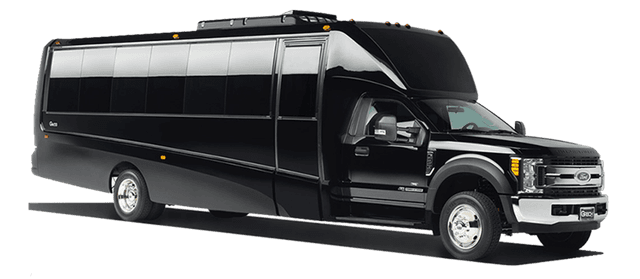
Available on request for larger groups. Comfort, luggage space, and a seamless ride for any event.

55 Passengers black Motor coach
The direct run is roughly 195 miles and about three hours in clear conditions, but three and a half to four is the honest planning figure with I-35 traffic through Waco, Temple and Georgetown. I-35 direct is the default and usually correct; the SH 130 toll road bypasses central Austin to the east and frequently saves substantial time on the southern approach, and it is inside your quoted rate.
The flight itself is under an hour, but door to door they are closer than that suggests once you add getting to the airport, security, boarding, deplaning and ground transport at both ends. A car is one continuous booking with no connection to miss, no bag drop, and no waiting at a gate, which is why teams and executives on a tight day often choose it.
That is the main reason people book it: three hours in an executive sedan or a Sprinter is three hours of usable time, whether that is calls, laptop work, or a team preparing together before a meeting. One way and return are priced differently, and for a same-day round trip we can hold the vehicle in Austin rather than deadheading back.
We run Dallas and Fort Worth to Austin and back along I-35 and the SH 130 corridor, with pickups across the metroplex and drop-offs anywhere in the Austin area.

Flat, all-inclusive fares with the SH 130 bypass toll included

An honest planning time of three and a half to four hours

One continuous ride, no airport, security or connection to miss
Three hours of usable working time each way
One-way or return, with the vehicle held for same-day trips

Licensed, insured and vetted chauffeurs, sedans through Sprinters
Roughly 195 miles and about three hours in clear conditions. In practice, three and a half to four is a more honest planning figure. I-35 through Waco, Temple and Georgetown carries heavy traffic and long-running construction, and the final approach into Austin is the least predictable stretch of interstate in Texas. We schedule against your arrival commitment rather than the best-case number.
Door to door, they are closer than the flight time suggests. The flight itself is under an hour, but add getting to the airport, security, boarding, the flight, deplaning and ground transport at the far end, and a realistic door-to-door figure is three to four hours. A chauffeured car is three to four hours with no airports involved. Where flying clearly wins is a solo traveller on a tight schedule with a flexible airport. Where the car wins is a group, an early or late departure, or a day where the drive can be working time.
It is quoted flat and all-inclusive before you book, the journey, tolls including the SH 130 bypass where we use it, and any included wait time. One way and return are priced differently, and a return on the same day is usually better value than two separate one-way bookings. Group vehicles are priced per vehicle rather than per passenger, which is why a Sprinter for eight often costs less per head than flying.
I-35 direct is the default and usually correct. The alternative is the SH 130 toll road, which bypasses central Austin to the east and frequently saves substantial time on the southbound approach when I-35 through Georgetown and Round Rock is congested. Tolls are inside your quoted rate, so the route decision is made on time rather than on cost. Which one applies depends on the hour and the day, and your chauffeur makes that call en route rather than at booking.
That is the main reason people book it. Three hours in an executive sedan or a Sprinter is three hours of usable time, calls, laptop work, or a team preparing together before a meeting. Compare that with the same three hours split across airport queues, a flight where you cannot take a call, and two ground transfers. For a team of four or more it is usually the better use of the day as well as the better cost.
One-way journeys are quoted as one-way. Long-distance chauffeur pricing does have to account for the vehicle returning, and we build that into the quoted figure rather than adding it afterwards, but you are told the number before you book and it does not change. Same-day returns are quoted as a round trip and are usually better value than two separate one-ways.
Yes, and for a day of meetings it is usually the right structure. The vehicle and chauffeur stay with you rather than releasing and returning, which means bags and materials stay in the car and you are not rebooking for the journey home. Same-day return trips are quoted as a block rather than as two transfers.
Executive sedans for one to three passengers, luxury SUVs for four to six, and executive Sprinter vans for seven to fourteen. For a journey this long, size up from what you think you need, three hours in a vehicle that is slightly too small is a noticeably worse day than three hours in one with room to spare. The Sprinter is the usual choice for teams because people can face each other and work.
Yes, in both directions. Airport-to-airport and city-to-airport long-distance runs are common when a flight schedule works better from the other city. Give us the flight number and departure time and we will work backwards from the check-in requirement rather than from a pickup time you have estimated.
Yes. Dallas to Houston is roughly 240 miles and around four hours. Austin to Houston is about 165 miles and two and a half to three. Dallas to San Antonio is roughly 275 miles and four to four and a half. Austin to San Antonio is around 80 miles and an hour and a half. All are quoted flat, one way or return.
Yes, arranged at booking. Waco is roughly the midpoint and a natural stop; Salado, Georgetown and Round Rock are all straightforward. Stops planned in advance are included in your quote. Stops added on the day are billed separately, which we state on the quote rather than leaving you to find on the invoice.
Forty-eight hours is comfortable for a sedan. Book further ahead for Sprinters and for anything during SXSW, Formula 1 weekend, Austin City Limits or a major Dallas convention, those weeks tighten long-distance vehicle availability across the entire state, because a vehicle committed to a three-hour run in each direction is out of service for most of a day.
No, and it should not be. Shared shuttle services run this route on a fixed timetable with multiple passengers and multiple stops, and they are considerably cheaper. If cost is the priority and the timetable fits, take the shuttle, we would tell you the same. A private car is worth it when the timing has to be yours, when you are travelling as a group, when you need to work, or when the arrival time is not negotiable.
Your chauffeur reroutes where a viable alternative exists, usually SH 130 for the Austin approach, or occasionally US 77 and SH 95 further north. Where no alternative helps, we tell you early rather than at the end. Because the rate is flat, a longer journey does not cost you more; the risk of traffic sits with us, which is precisely the point of a fixed quote on a route this variable.
Yes, and it is one of the most common bookings on this route. A Sprinter keeps a team together, turns the drive into preparation time, and costs less per head than flights for groups of roughly four and above once airport transfers at both ends are counted. Multi-vehicle movements are coordinated from a single point of contact.
Yes. Every chauffeur operating on our behalf is commercially licensed, background-checked and drug-tested, and carries commercial liability insurance. Long-distance runs are also scheduled with driver-hours in mind, a same-day return to Austin and back is a long shift, and we plan it rather than assuming it.
Yes. Early-morning departures and late-evening returns are common on this route, and for many travellers they are the reason to book a car rather than fly, there is no first flight to miss and no last flight to be stranded by. Overnight and pre-dawn departures should be booked further ahead.
Yes. Flights are tracked, so a delayed arrival at DFW or Love Field does not require rebooking the onward leg. This comes up most often when a flight to Austin is cancelled or when the schedule into Dallas is better, the drive becomes the recovery plan rather than the original one.
Roughly 80 miles and typically an hour and twenty to two hours. I-35 between the two cities is the least predictable stretch of interstate in Texas, it carries heavy freight traffic, has been under sustained reconstruction in places, and backs up around San Marcos and New Braunfels at hours that do not follow a normal commuter pattern. We schedule against your arrival commitment rather than the best case.
Depends entirely on the trip. For one person on a flexible schedule, the bus and the shared shuttle services on this corridor are considerably cheaper and perfectly reasonable, we would say so on the phone. A private vehicle earns its place when you are travelling as a group, when the arrival time is not negotiable, when the drive should be working time, or when you are connecting between the two airports and a missed flight would cost you something real.
Yes, and it comes up often. Travellers fly into Austin when the schedule or fare is better and then need to reach San Antonio, or the reverse. It is roughly 80 miles from Austin-Bergstrom and about an hour and a half. Tell us the flight number and we will track it, a delayed arrival on this route otherwise means renegotiating ground transport at the far end.
Yes. Both sit on the corridor between the two cities, San Marcos roughly 30 miles from Austin, New Braunfels about 50. They come up for outlet shopping, university visits, river trips and the wedding venues in the area. Journeys to either are quoted the same way, flat and all-inclusive.
Flat and all-inclusive before you book, covering the journey, tolls and any included wait time, priced per vehicle rather than per person, which is why the comparison against a per-seat bus or shuttle changes once you are three or four people. One way and same-day return are quoted differently, and a return is usually better value than two separate one-ways.
Yes, and for a day of meetings or an event it is usually the better structure. The vehicle and chauffeur stay with you rather than releasing and returning, which means bags stay in the car and nobody is arranging the journey home at the end of a long day.
© 2026 Genius Limo | All rights reserved